
Who Owns Your Product Data When the Buyer Is an AI Agent?
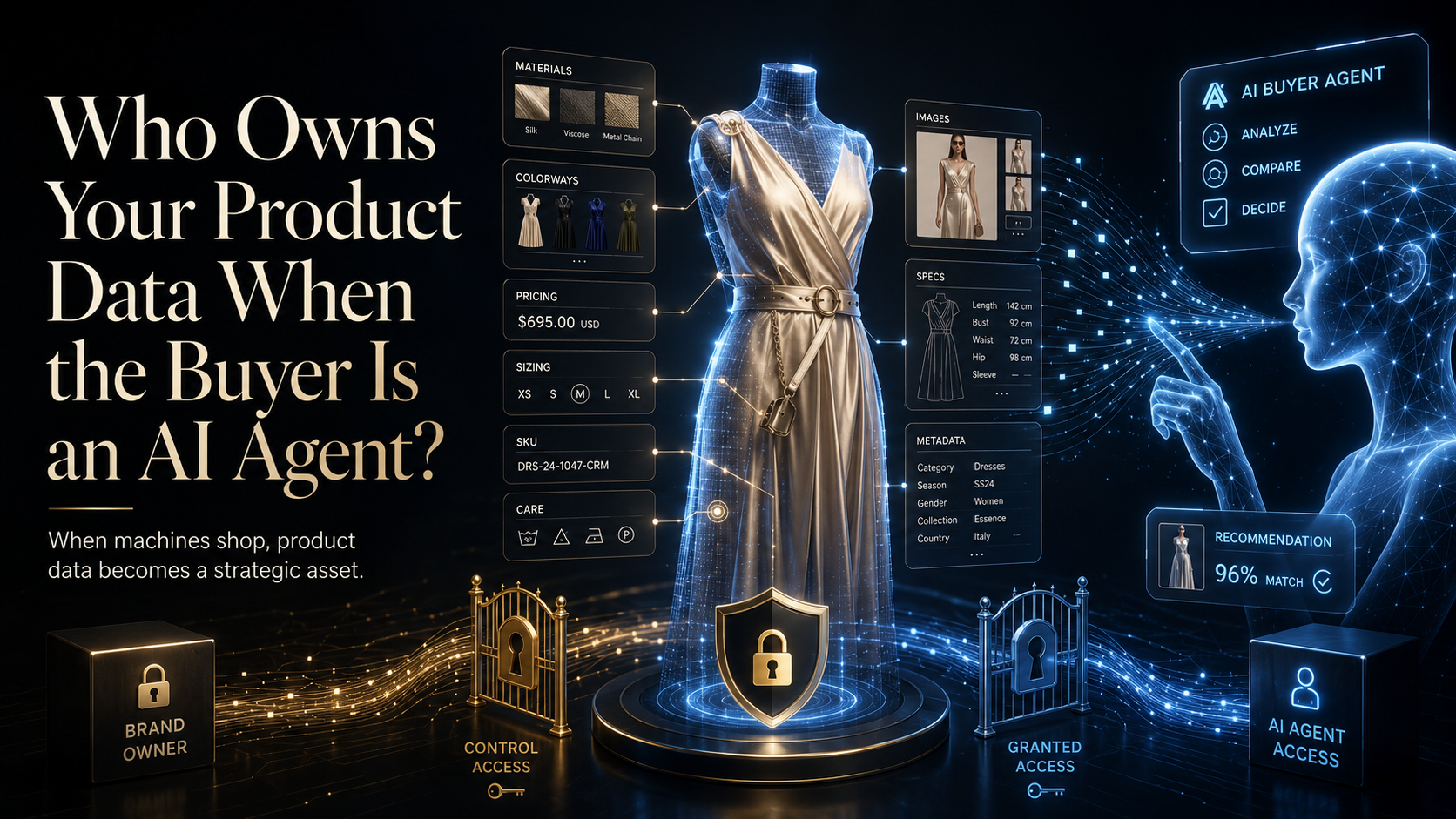
A new wave of AI shopping agents is being built on one big assumption: that SKU-level product data is everywhere and free to use. At the same time, the companies that own that data are finding every reason to lock it down. For brands, this turns product data into something it never used to be, a strategic asset.
Picture the next version of online shopping: a customer doesn’t browse your site or scroll a marketplace, they ask an AI agent to find, compare, and buy the right product for them. That future is being built right now, by everyone from the biggest tech platforms to the buzziest startups, and it rests on a single assumption: that detailed, SKU-level product data is ubiquitous and freely available for machines to read. There’s just one problem. The companies that actually own and control that data, brands, retailers, marketplaces , are discovering powerful new reasons to lock it away rather than leave it lying around for someone else’s AI to harvest. That tension, between agents that need open product data and gatekeepers who want to close it, is about to make your product data one of the most strategically important assets you own.
This is a quietly enormous shift in what product data is for. For decades it was operational plumbing. In an agentic-commerce world, it becomes the thing that determines whether, and how, you get represented to the AI that’s doing the buying.
Agentic commerce runs on SKU-level data
The new discovery and transaction flows being engineered across tech all share a dependency: they need structured, accurate, machine-readable product data to function. An AI agent comparing options is reading composition, fit, price, availability, and attributes — the SKU-level detail that lets it reason about what to recommend and buy. Where that data is rich and structured, the agent can represent the product faithfully. Where it’s thin, inconsistent, or missing, the agent either guesses or skips the product entirely. The Interline framed the moment precisely: companies are architecting AI-assisted and agentic flows that rely on the open availability of SKU-level data, even as the gatekeepers of that data find more incentives to lock it away.1
In an agentic market, thin or messy product data doesn’t just look bad — it gets your product guessed at, or skipped entirely, by the AI doing the buying.
Open enough to be found, owned enough to control
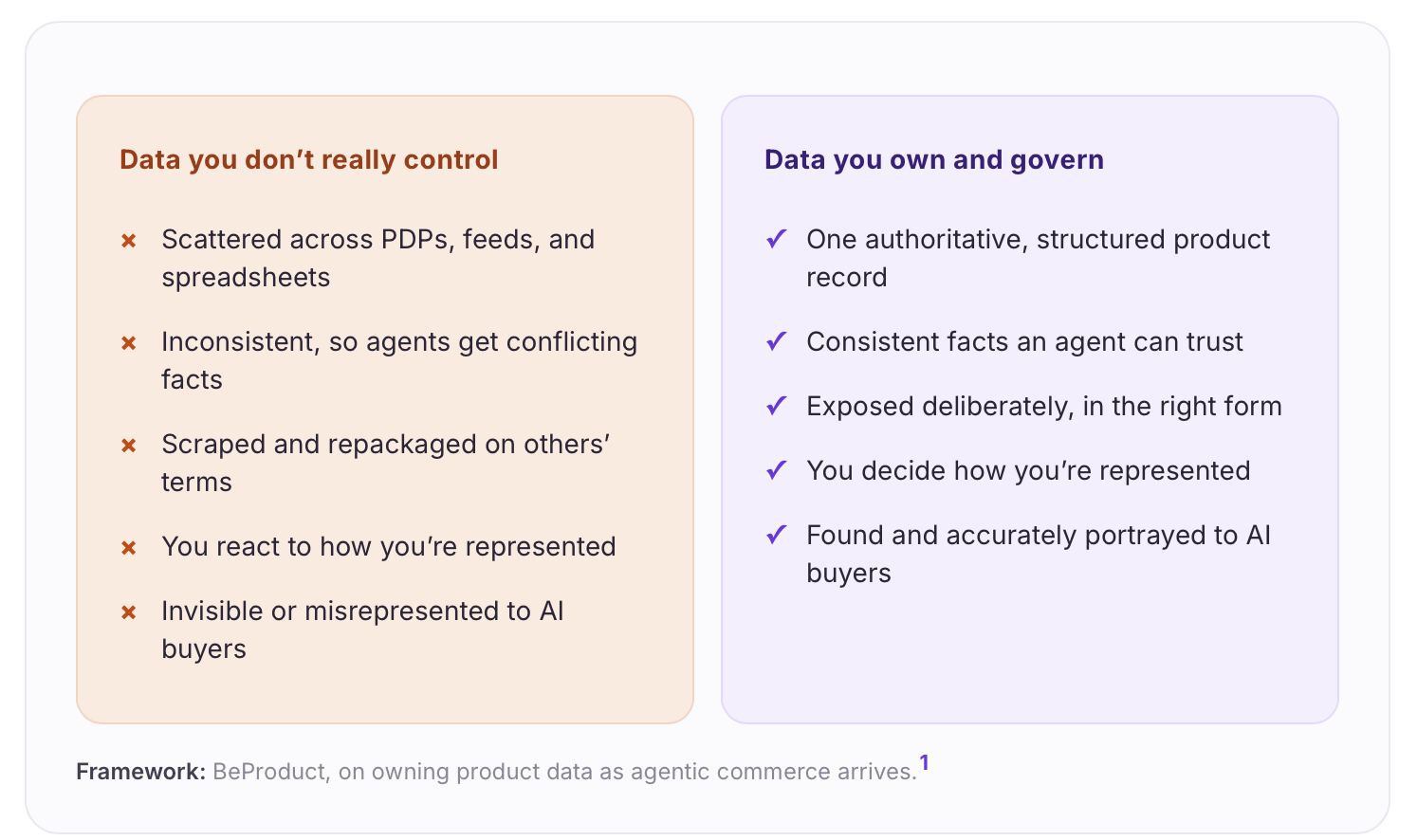
Here’s the bind every brand is walking into. To be discoverable by AI agents, your product data needs to be available and legible. But leave it fully open and you lose control over how you’re represented, scraped, summarised, repackaged, and possibly misrepresented by systems you don’t own. The instinct to lock everything down is understandable, but taken too far it makes you invisible in the channels where buying is heading. The resolution isn’t open or closed, it’s owned. The brands that win this will be the ones with a single, authoritative, structured source of their own product data, which they can choose to expose deliberately, in the right form, to the right channels, while always retaining the canonical version. You can’t control how your data is used downstream if you don’t have a clean, governed version of it upstream.
FIGURE 1
Two postures toward product data in an agentic market
Neither “leave it everywhere” nor “lock it all away” works. Ownership is the third option.
A structured product record is the asset
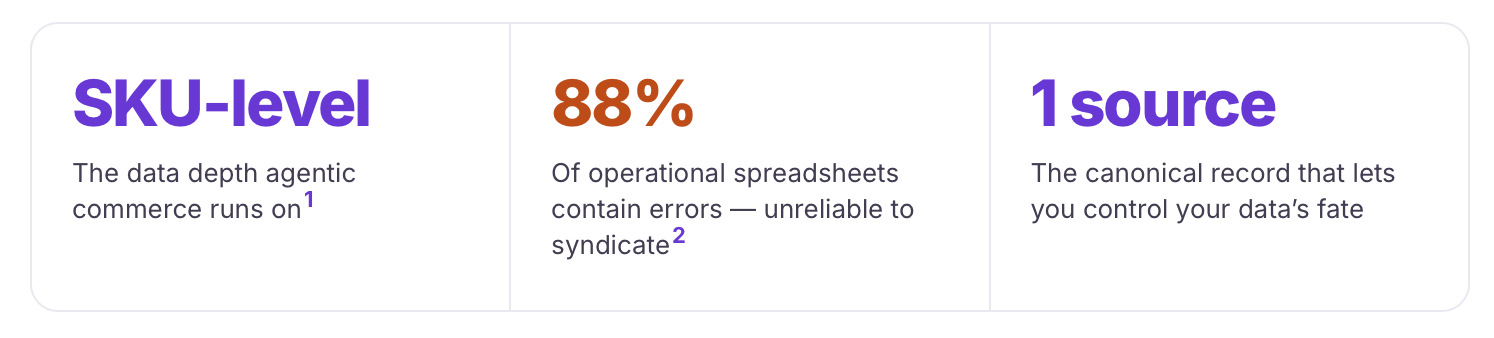
All of this comes back to one capability: a single, structured, governed product record. It’s the difference between having product data and owning it. With a clean canonical source, you can syndicate accurate product information to the channels and agents where buying happens, keep it consistent everywhere, update it once and have it propagate, and always hold the authoritative version no matter how it’s used downstream. Without it — with product data living in scattered spreadsheets and inconsistent PDPs, you have nothing solid to expose, nothing to govern, and no control over how the machines doing the buying understand you. With roughly 88% of operational spreadsheets containing at least one error, product data managed that way isn’t just hard to syndicate; it’s unreliable at exactly the moment reliability becomes a competitive asset.2
The 3D and digital-product-creation toolchain enriches what you own. CLO and Browzwear generate detailed structured product, material, and visual data, and Browzwear’s assets are built to export cleanly into PLM and ERP, which means the canonical record you control can be richer and more accurate than a competitor’s scraped fragments.34 In a market where agents reward the most legible, trustworthy product data, depth of owned data becomes an advantage.
Own your product data before the agents arrive
The agentic-commerce shift turns a question most brands never asked, who really owns and controls our product data?, into a strategic one. The companies that thrive won’t be the ones who locked everything down or the ones who left everything open; they’ll be the ones who own a single, structured, authoritative version of their product data and choose, deliberately, how to expose it to the systems now doing the buying. That ownership starts with a real product record, not a folder of spreadsheets. Build it now, while agentic commerce is still arriving, and you’ll enter that world in control of how you’re found and represente, instead of at the mercy of whoever scraped you last.
The reframe
Product data used to be plumbing; in an agentic market it becomes a strategic asset — the thing that decides whether an AI buyer finds you, trusts you, and represents you accurately. You can only control that if you own a clean, structured, canonical version upstream. The brands that own their product data will own how they show up; the rest will be whatever the scrapers made of them.
The takeaways
Agentic commerce runs on SKU-level data AI agents read structured product facts to find, compare, and buy — and skip what they can’t parse.
The answer isn’t open or closed — it’s owned a canonical, governed source you expose deliberately to the right channels.
A structured product record is the asset it’s the difference between having product data and controlling how it’s used.
Owned data can be richer than scraped data CLO and Browzwear deepen the structured product data you control.
REFERENCES
The Interline, “A Precarious Moment For Platforms Built On Scraping Product Data” (AI-assisted and agentic discovery and transaction flows rely on the ubiquity and open availability of SKU-level data, while the gatekeepers of that data find more incentives to lock it away). theinterline.com
R. Panko, University of Hawaii, “What We Know About Spreadsheet Errors” (~88% of operational spreadsheets contain at least one error). panko.shidler.hawaii.edu
CLO Virtual Fashion (CLO3D), a BeProduct 3D/DPC integration partner (structured product, material, and visual data from true-to-life virtual garments). clo3d.com
Browzwear, a BeProduct 3D/DPC integration partner (production-validated digital twins and structured product data that export cleanly to PLM and ERP). browzwear.com/blog
The agentic-commerce framing reflects current industry reporting (The Interline) and an emerging shift, not a settled state. CLO and Browzwear are BeProduct partners; their capabilities are vendor-reported.